

Safe lifting turns tough jobs into manageable work, preventing strain and costly mistakes. Choosing gear that fits the task and the environment reduces risk, speeds up workflows, and protects surfaces and materials during handling. The goal is simple: match the tool to the load, apply good rigging practice, and keep inspections routine so nothing catches you off guard.
What’s in the Toolbox?
Lifting equipment covers the devices used to raise, secure and move loads. Think chains for rugged loads, synthetic slings for gentler handling, clamps and grabs for sheet or plate, and spreader or lifting beams to distribute weight across wider spans. Each option is designed around load type, contact surface, and control needs.
When you’re moving irregular shapes, secure gripping and balanced lift points matter; when you’re preserving finishes, softer contact and even load paths take priority. Lifting equipments are the backbone of safe materials handling in workshops, warehouses, and sites. Purchasing your own lifting equipment is the support that you need and might have never known you needed when you need dependable performance across varied tasks.
Match the Gear to the Job
Start with load characteristics: weight, shape, centre of gravity, and surface sensitivity. Alloy chain is suited to harsh conditions and high loads; webbing slings minimise abrasion on coated or polished surfaces. For plates, clamps with rated capacities provide reliable grip if used within spec and with proper edge presentation.
Wide or awkward loads benefit from beams that share forces across multiple points, reducing local stress. Consider the environment too: outdoor work may call for corrosion-resistant finishes, while confined spaces reward compact, easily adjusted configurations. Proof testing and marked ratings help you verify suitability at a glance.
Built Tough: Materials That Matter
High-tensile steels deliver strength, wear resistance and predictable behaviour under load, making them a mainstay for chain, hooks and shackles. Synthetic fibres like polyester and nylon provide low weight, flexibility, and reduced surface damage, which is especially useful where finish preservation matters.
Hardware components are engineered for fatigue resistance, consistent tolerances, and traceable ratings. That balance, i.e. steel for resilience, synthetics for adaptability, means you can tailor rigging to the job rather than forcing one approach to fit every scenario.
Smart Tips
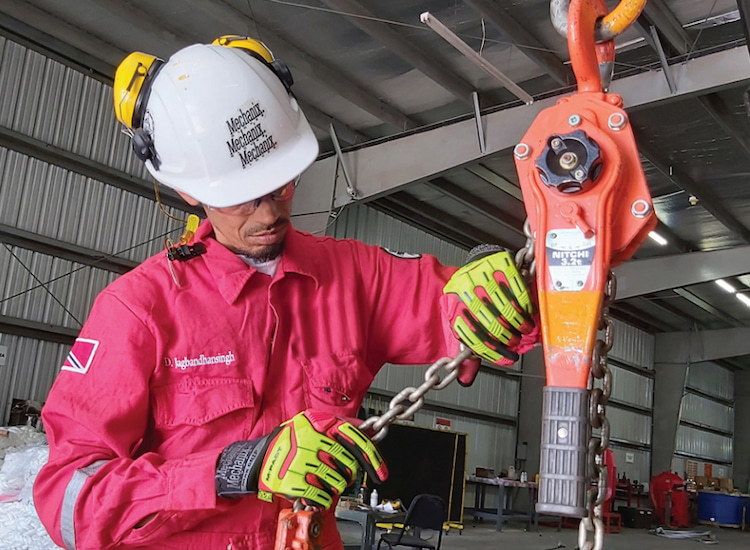
source: roscopro.com
- Load limits: Always work within rated capacities. Overloading invites failure; underrating wastes time and capability.
- Contact surfaces: Match sling material to the surface. Use synthetic for delicate finishes; use chain or wire where abrasion and heat are present.
- Grip and geometry: Ensure clamps are applied to suitable edges with correct angles and balanced lift points.
- Distribution: Use beams to spread forces across multiple pick points to protect the load and control swing.
- Adjustability: Include connectors like shackles and swivels to align gear cleanly and prevent twist under load.
- Environment: Choose corrosion-resistant materials or protective coatings if exposure is likely.
- Inspection: Before every lift, check for wear, cuts, corrosion, deformation, mislabels, or missing pins. Tag and remove anything suspect.
- Storage: Keep synthetics dry and away from sharp edges; keep metal components clean, lightly lubricated where appropriate, and protected from impact.
Safety is More Than Strength
Strength alone can’t compensate for poor rigging. Balanced load paths, controlled lifting speeds, and avoiding shock loading are fundamental. Rated markings must be legible; documentation and proof testing records should align with the gear in use.
Training matters, such as operators should know sling angles, effects on rated capacity, and how edge protection prevents cut-through on synthetics. Regular maintenance keeps tolerances tight and mechanisms responsive, and planned replacement cycles ensure ageing components don’t become surprises in the field.
Fit for Purpose Across Industries
Different sectors lean on different strengths. Fabrication and heavy maintenance typically prioritise alloy chain and robust hardware for durability under heat and abrasion. Warehousing and installations often prefer synthetic slings for quicker handling and surface care.
When managing large panels or structural elements, beams paired with appropriate connectors control deflection and keep loads stable. The common thread is clear selection: choose what protects the load, supports the workflow, and stays dependable under the real conditions you face.
Planning Lifts That Go Right the First Time
Good planning saves time and prevents rework.
- Define the lift path, clearance, sling angles, and attachment points.
- Confirm the rated capacity at the actual angle of use, not just the straight-pull figure.
- Check that tag information is readable and matches your documentation.
- Prepare edge protection, softeners, or spreaders where needed. Assign roles – signal, controls, riggers – so communication is crisp and there’s no ambiguity mid-lift. A few minutes of planning prevents hours of recovery.
Confidence in Every Lift
Choosing well, inspecting routinely, and applying sound rigging practice makes heavy work feel controlled and efficient. With the right mix of materials, geometry, and compliance, you protect people, preserve finishes, and keep schedules tight. When gear matches the job and training underpins technique, lifts become predictable, safe, and quick, exactly what you want on any site.