

In industries where people work alongside moving vehicles, heavy machinery, or poor lighting conditions, being visible is paramount. Hi-vis vests are one of the most effective and affordable pieces of personal protective equipment available. But despite their simplicity, there are a few points to consider when choosing the right vest for your specific work environment.
Why Hi-Vis Vests Matter
Every year, workers across the globe suffer serious injuries in accidents that a high-visibility garment could have prevented. Struck-by accidents, where a worker is hit by a vehicle, forklift, or a piece of machinery, are among the leading causes of workplace fatalities in industries like construction, logistics, mining, and road maintenance.
The human eye has a natural predisposition to seek out colour contrast and motion, but in busy, dark, or poorly lit conditions, a worker in standard clothing disappears into the background. A reliable custom hi-vis vest provides a solution through the combination of fluorescent fabrics and retroreflective tapes. The fluorescent fabric absorbs the ultraviolet rays and reflects them as visible light, creating contrast against practically any background when daylight is available. The retroreflective tape bounces light back toward its source, making a worker visible even in dark or foggy conditions.
The result is a garment that dramatically extends the distance at which a worker can be detected, giving vehicle operators critical extra seconds to react. At highway speeds, those seconds are everything.
Colour Spectrum: Not All Hi-Vis Is the Same
source: magnific.com
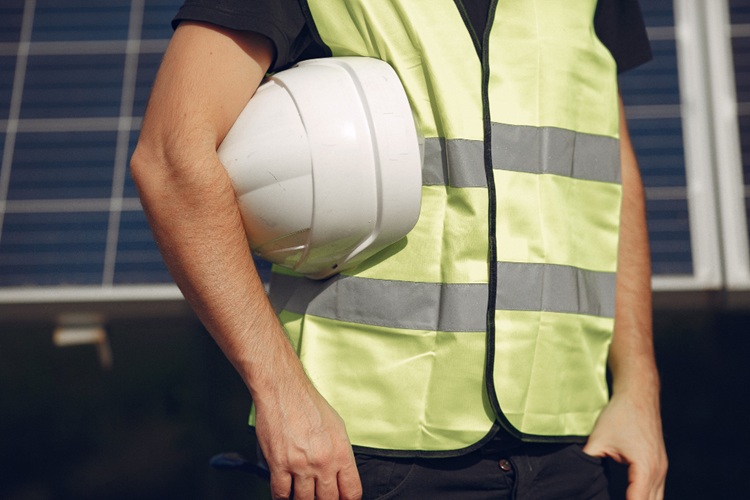
The most common colour for a hi-vis vest is fluorescent yellow-green because it offers the highest contrast against natural and urban background surfaces during daylight.
However, hi-vis clothing pieces also come in fluorescent orange-red and fluorescent red. Orange-red is best suited for environments with vegetation (forestry and agriculture), where yellow-green may be difficult to distinguish from the green environment. It is also very popular among emergency responders and traffic control workers due to its high hazard signal value.
Fluorescent red is used in certain industries where it’s important to distinguish workers based on their duties and levels of danger. There are instances when multiple colours are used strategically, for example, supervisors wear orange while workers wear yellow. The choice of colour is not only a matter of preference but should be based on the conditions of the worksite, regulatory requirements, and role identification.
Custom Hi-Vis Vests: Branding Without Compromising Visibility
Many businesses choose to customise their hi-vis vests. They are a practical way to brand workwear without compromising safety. Companies in sectors such as construction, events, utilities, and transport use custom hi-vis vests with logos, employees’ names, job titles, or emergency contact information.
Screen printing and embroidery are the two most common methods. Screen printing delivers bold, cost-effective results for large orders and works well on the flat panels of mesh or woven vests. Embroidery offers a more durable, premium finish that withstands repeated washing and outdoor wear better over time.
It is critical to ensure that printing or embroidery on the personalised hi-vis vest does not affect visibility. Large, dark logos on a fluorescent background or graphics that cover the reflective tapes can reduce their effectiveness. Reputable manufacturers place custom features in areas that maintain the effectiveness of the fluorescent background and reflective tapes.
Australian Standards
High visibility garments, including personalised high visibility vests worn in workplaces in Australia, must meet AS/NZS 4602.1:2011 -the Australian and New Zealand Standard for High Visibility Safety Garments. This standard specifies the design, colour, placement of the retroreflective tape, and performance required in the garments.
Under this standard, the garments can be divided into different classes.
- Class D/N (day/night) garments must have both fluorescent background material and retroreflective tape. They are suitable for use around dusk, dawn and nighttime.
- Day-only or Class D garments use fluorescent materials but have minimal or no retroreflective tapes, making them appropriate only in full daylight conditions.
- Class N (Night) garments are intended for night-time or low-light use. They feature retroreflective tape but may use a non-fluorescent background. These are less common as standalone garments and are more often part of a combined classification.
Safe Work Australia and individual state regulators generally require that workers in high-risk work areas, including road construction, utilities, rail, and mining, wear Class D/N compliant garments as a minimum. Employers have a duty of care under work health and safety legislation to provide compliant PPE. Non-compliant garments, even if they look similar, do not satisfy this obligation.
When purchasing hi-vis vests in Australia, always look for the AS/NZS 4602.1 compliance mark on the label. Imported garments, cheap promotional vests, and fashion-style reflective clothing frequently fail to meet the standard and should never be substituted for certified PPE in genuine hazard environments.
Simple Garments, Big Responsibility
Hi-vis vests may look like simple garments, but they are an advanced combination of colour science, material technology, and workplace regulation. Select the right colour and class, customise responsibly, and ensure the standards are met. When done right, visibility can save lives.