

We live in an era of advanced technology, where wireless electronic gadgets are taking over, eliminating the need for obtrusive cables. While most wireless gadgets have appeared in the last few years on the market, wireless microphones are not a new thing and have been around for a while.
Introduced as an expensive addition for select venues and performances, they’re now an affordable reality for all. Today, wireless mics are most commonly used in live sound applications.
Known as well as cordless or radio mics, they offer numerous benefits for performers and presenters. You can buy a mic wireless model and don’t worry about getting tangled up in cables onstage. Whether it’s a concert, business presentation, filmmaking, or educational event, you can move freely and connect better with your audience. So, let’s see what’s in a wireless microphone system that makes it so popular these days.
Components of a Wireless Microphone System
source: pinterest.com
Microphone
Same as a wired microphone, the purpose of a wireless one is to capture sound. There are three primary types of wireless microphones available, each designed for a specific application.
Handheld
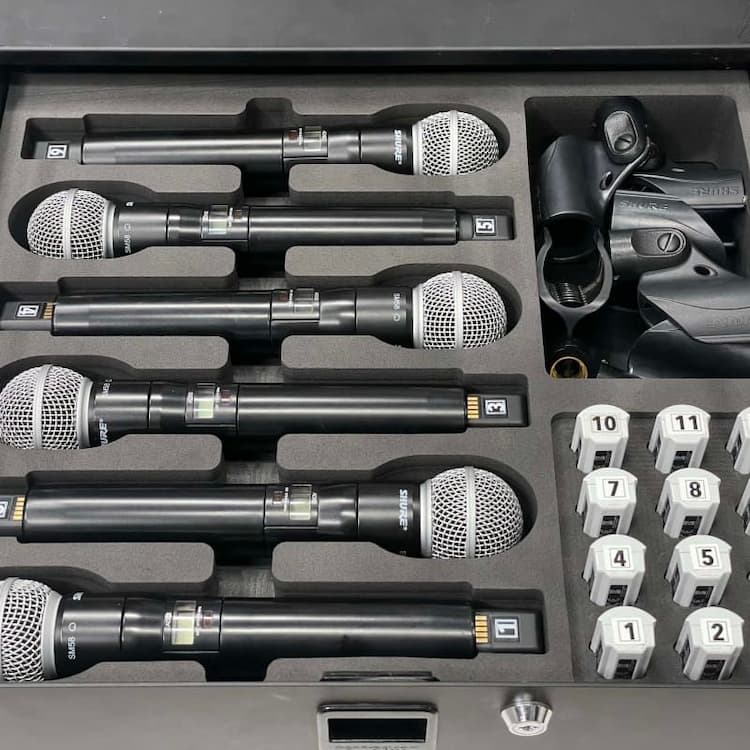
Handheld microphones are ideal for lead vocalists and stage scenarios in which the mic is passed from one person to another, such as award shows and panel discussions. They feature a wireless transmitter built into the mic’s body and a wireless receiver. Wireless handheld mics are similar to their wired counterparts, only they come with a thicker handle.
Headset
It’s the type of mic that sits over the ear or around the back of your head. It comes with a bodypack transmitter or with a transmitter in the neckband and is perfect for performers and presenters who need their hands free on stage. Headset microphones are available in various sizes, suitable for various needs, including bulky and lighter, less noticeable models.
Lapel
This type of mic can be found under many names, such as lavalier, collar, personal mic, and more. Lapel microphones are small clip-on mics that are most commonly used in interviews and live performances, where an unobtrusive, discreet mic is required. They clip onto the performer’s clothing and connect to a transmitter pack.
Transmitter
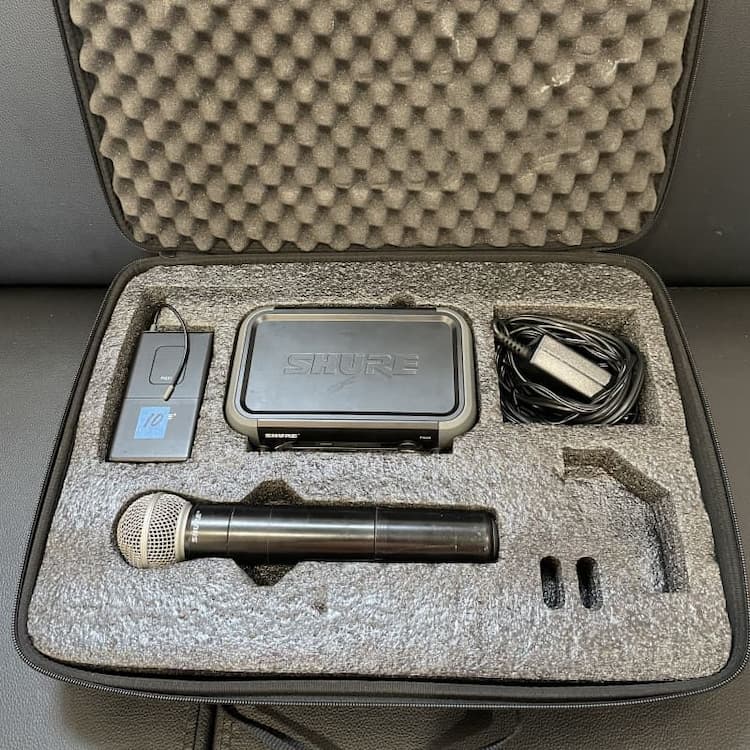
It’s worn or held by the user, and its role is to convert the audio signal from the microphone to a radio signal. There are two types, handheld and bodypack transmitters.
Handheld mic transmitters combine a handheld mic and a transmitter in one, allowing for convenience and ease of use. Bodypack transmitters are worn on a belt or a guitar strap; they feature a connector that suits lapel and headset mics, as well as electric guitar and bass cables.
Receiver
As the name suggests, it’s the part that receives the radio signals sent by the transmitter. Once received, it converts them back to audio.
There are modular, portable and guitar pedal receivers. The modular ones can be freestanding or rack-mounted. The portable ones look like bodypack transmitters, only they perform the opposite function. Guitar pedal receivers are built specifically for electric guitar and bass players, featuring a design that integrates seamlessly into a pedal board.
The Benefits of Going Wireless
source: pinterest.com
Moving Freely
This is the most important benefit for some, as it allows the user to move around the stage with no loss of sound quality or fear of tripping. Knowing that you can move without restriction while performing can be a great confidence booster for both beginners and professional artists.
An Aesthetically Pleasing Performing Area
A stage that’s clean of cables is safer for the performers, but also offers a more enjoyable experience for the audience. With no cables around to distract the viewers, they can focus more on the performance.
Getting Rid of Frayed Wires
Very often, cabled mics can suffer from frayed wires. In that case, the cord becomes damaged and hazardous, and a wireless mic is an excellent solution to prevent any potential danger.
Things to Consider Before Making a Purchase
When you opt for a wireless mic, there are a few things to consider to choose the right one for your production needs.
Durability
Go for a mic that’s designed to withstand the rigours of live performance. A rugged and reliable mic can make a big difference in your sound quality, especially if you’re touring, as travel can be rough on gear.
Feedback Resistance
No one liked the sound of a PA system squealing. To prevent it, choose a mic that boasts excellent resistance to feedback to keep your team and the audience happy.
Batteries
Before each performance, it’s essential to ensure the mic is fully charged and can last the entire show. Always use the right type of batteries for your mic to ensure its durability and efficiency.
Final Thoughts
One of the things that matters the most on stage is the power of sound. Wireless microphones allow you to bring audio signals from the stage to the sound system without using cables while maintaining the audio quality of your gear. They offer a safer and more enjoyable experience for everyone involved in the performance, from the people on stage to the people in the audience.